

Lithium vs Lead-Acid Batteries for Arizona's Extreme Heat: 2026 Comparison
When I first started dabbling in solar years ago, the "gold standard" was those heavy, golf-cart-style lead-acid batteries. They were cheap, readily available, and heavy enough to break your back.
But here's the thing about Arizona: The heat doesn't care about your budget.
I've seen lead-acid battery banks in Kingman and Yucca that were supposed to last 5-7 years completely dead in 18 months. Why? Because ambient temperatures of 110°F+ boil the electrolyte and warp the plates inside those batteries. If you aren't running air conditioning for your battery shed (which uses even more power), lead-acid is a ticking time bomb for your wallet.
As we head into 2026, the technology has shifted. At Arizona Off-Grid Solutions, we almost exclusively recommend Lithium Iron Phosphate (LiFePO4) batteries. Let me tell you why, from the perspective of someone who has to warranty these systems.
The Heat Factor (And Cold): Why Chemistry Matters

Lead-acid batteries degrade rapidly above 77°F. For every 15 degrees above that, you cut the battery life in half. In an uninsulated shed in July, your expensive battery bank is aging in dog years.
Lithium (LiFePO4) is different. While no battery loves extreme heat, high-quality lithium cells are rated to operate safely and effectively up to 130°F-140°F with much less degradation. They have built-in Battery Management Systems (BMS) that actively monitor temperature and protect the cells.
The Winter Advantage: Here's another massive benefit—most quality lithium batteries have self-heating capability. When temperatures drop below freezing (common in higher elevations like Flagstaff or Colorado), the BMS automatically warms the cells before charging. Lead-acid batteries simply refuse to charge in cold weather, leaving you powerless during winter storms. Lithium takes care of itself.
Usable Capacity: The "50% Trap"
This is the biggest misconception I explain to customers.
Lead-Acid: You can only safely discharge them to 50%. If you have a 10kWh lead-acid bank, you actually only have 5kWh of usable power. Go lower, and you permanently damage them.
Lithium: You can safely discharge them to 80-90% (or even 100% occasionally). A 10kWh lithium bank gives you 9-10kWh of usable power.
To get the same actual power as one lithium battery, you often need to buy, house, and cable two to three times as many lead-acid batteries.
Weight and Space: The "Steve's Back" Factor
I'm an Army veteran. I've carried heavy rucksacks. But hauling 120lb lead-acid batteries into a remote cabin is nobody's idea of fun.
Here's the reality: Lithium batteries aren't necessarily lighter pound-for-pound, but you use significantly fewer of them to achieve the same usable capacity. Because of the 50% discharge limitation on lead-acid, you need double or triple the physical batteries. They are also compact. We build "server rack" style cabinets for our lithium banks that take up a fraction of the floor space. That leaves more room in your shed for tools, or more room for Ghost and Phantom to nap in the shade.
Lifespan: The Real Cost Difference
Here's where the numbers get brutal for lead-acid defenders.
Lead-Acid: Rated for only 300-500 discharge cycles. And each cycle degrades their full capacity permanently. By year two, that "10kWh" bank might only hold 6kWh. You're replacing them constantly.
Lithium (LiFePO4): Rated for 5,000 to 10,000+ cycles while maintaining their full capacity. These batteries don't significantly degrade until you're well past a decade of daily use. They just keep working, day after day, year after year.
So when you factor in replacement costs, lithium isn't just better—it's the only choice that makes financial sense long-term.
Maintenance: Do You Want a Hobby or a Power Source?
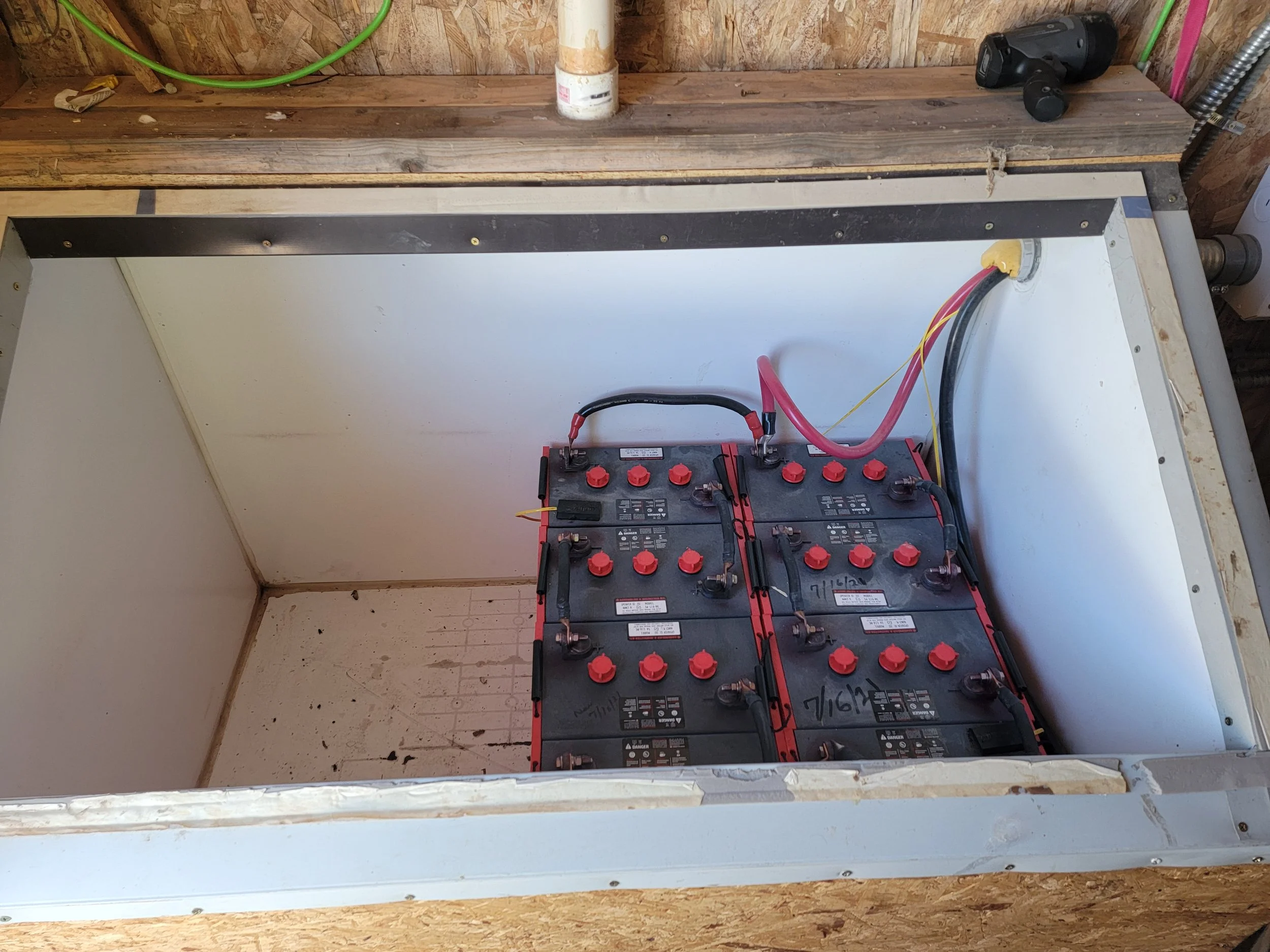
Lead Acid Batteries Steve Replaced with LiFePO4 Server Rack Batteries
Lead-Acid: Requires regular "watering" with distilled water. Requires checking specific gravity. Requires equalization charging. It generates corrosive gasses that eat your cables. If you forget maintenance for a month in summer, your bank is toast.
Lithium: Zero maintenance. None. Install them, tighten the connections, and forget them. They don't off-gas, they don't leak, and they don't need water.
The Cost Analysis (The Elephant in the Room)
Yes, the sticker price on Lithium is higher. But let's look at the 10-year math.
Lead Acid Scenario: Buy cheap bank ($2,000). Replace it in 2 years due to heat damage ($2,000). Replace again in 4 years ($2,000). Replace again... You get the point.
Lithium Scenario: Buy quality bank ($4,500). Use it for 10-15 years. Done.
Lithium isn't just better technology; it's cheaper per kilowatt-hour over the life of the system.
Confused about which battery brand to trust? There are a lot of cheap imports out there. We test everything we sell in real-world conditions. Check out our Solar Store for the exact batteries Steve trusts on his own property.
Our Verdict for Arizona
If you are building a weekend hunting shack you visit twice a year, maybe—maybe—lead acid makes sense. But for anyone looking for True Freedom and daily reliability, Lithium Iron Phosphate is the only responsible choice.
We build our Turn-Key Systems with top-tier Lithium batteries that communicate directly with our inverters. This "closed-loop" communication ensures your batteries are charged perfectly every time, regardless of whether it's 115°F or 25°F.

Upgrade to Reliable Power Today
Stop worrying about water levels and dead batteries. Our Custom Turn-Key Solar Grids come pre-configured with premium Lithium storage designed for the Arizona climate.
Get a System That Lasts Decades, Not Months
Contact Steve & Carly for a Quote
*Steve Ulman is a 25th Infantry combat veteran and owner of Arizona Off-Grid Solutions. Along with his fiancé Carly and their dogs Ghost and Phantom, Steve lives off-grid in Northwest Arizona, designing and installing custom solar systems across Arizona, Nevada, and Colorado.*