

How to Size Your Off-Grid Solar System: Arizona Homeowner's Calculator Guide
If I had a nickel for every time I've driven out to a remote property in Mohave County to fix a "broken" solar system that was simply undersized, I'd have enough money to buy Ghost and Phantom a lifetime supply of steak. The story is almost always the same: someone bought a kit online that promised "whole home power," hooked it up, and then watched the lights go out the first time a cloud rolled over the Hualapai Mountains.
Here at Arizona Off-Grid Solutions, we believe freedom starts with the truth. And the truth is, you can't build a reliable off-grid life on guesswork. You need hard numbers.
Designing a system that actually works—whether you're in Kingman, Yucca, or deep in the Colorado wilderness—requires a specific formula. After three years of designing custom grids and living this lifestyle myself with Carly, I'm going to walk you through exactly how we size systems for our clients. No fluff, just the math you need to be truly independent.
Step 1: The "Kill-A-Watt" Truth Serum
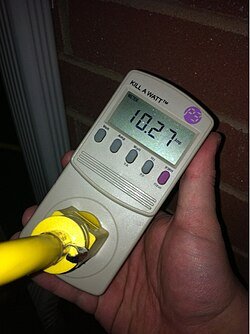
Most people think they know what they use. They don't. I've had clients tell me they "barely use any power," only to find out they run a space heater all night and leave three TVs on standby.
Before you buy a single panel, you need a realistic load audit. This isn't about what you think you use; it's about what your appliances actually pull.
Steve's Action Item: Buy a "Kill-A-Watt" meter (they're cheap) and plug your appliances into it for 24 hours. Record the kWh (kilowatt-hours). Do this for your fridge, TV, computer, and anything else with a plug.
Step 2: Calculating Your Daily Watt-Hours
Once you have your measurements, it's time for some simple math. You need to list every single electrical item you plan to use.
Device: (e.g., LED Light Bulb)
Watts: (e.g., 9 watts)
Hours used per day: (e.g., 5 hours)
Total Watt-Hours: 9 x 5 = 45 Watt-Hours
Do this for everything. Then add it all up. That final number is your Daily Energy Consumption. Let's say it's 10,000 Watt-Hours (or 10 kWh).
The "Fudge Factor": Take that total and multiply it by 1.25. Why? Because inverters aren't 100% efficient, and wiring has resistance. If you need 10kWh, plan for 12.5kWh. We design for reality, not laboratory conditions.
Step 3: Sizing the Battery Bank (The 3-Day Rule)
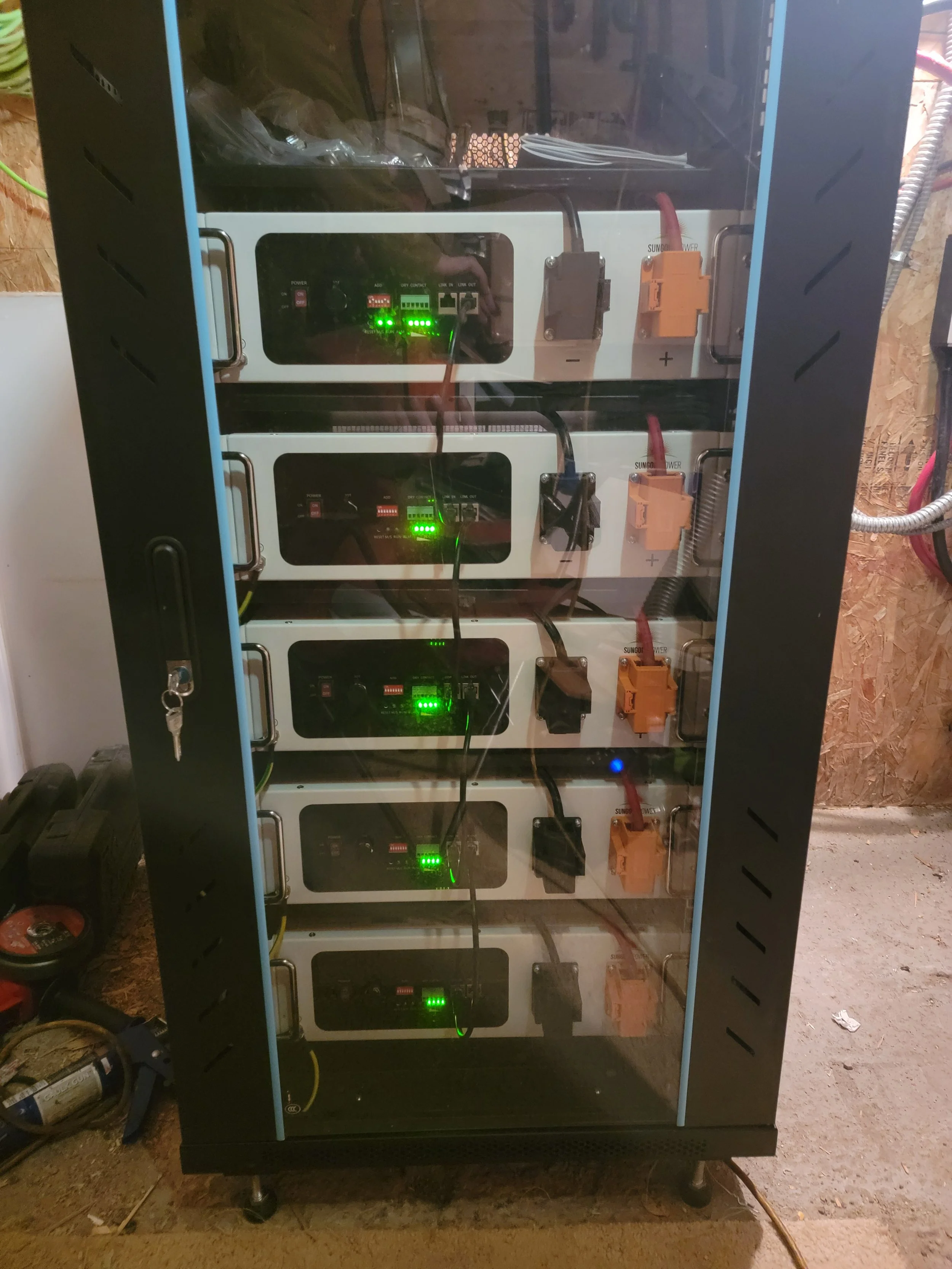
This is where cheap kits fail. They give you enough battery for one sunny day. But what happens during a winter storm in Flagstaff or a week-long monsoon in the valley?
At AZOGS, we design for a minimum of 2 days of autonomy. That means if the sun doesn't shine for three days, you still have power without running a generator.
The Math:
Daily Usage (12.5 kWh) x 3 Days = 37.5 kWh of Battery Storage.
Is that a lot of batteries? Yes. Is it cheap? No. But is it reliable? Absolutely. When I'm out on a remote install and the weather turns, I sleep soundly knowing my clients aren't freezing because they tried to save a few bucks on storage.
Feeling overwhelmed by the math? I get it. That's why I offer Free Consultations. We'll look at your appliance list and property location and do these calculations for you. No pressure, just accurate numbers to help you plan. We enter these numbers individually into a formula based on how many days of autonomy you would like. This formula accounts for your geographical location and the entire year.
Step 4: Sizing the Solar Array
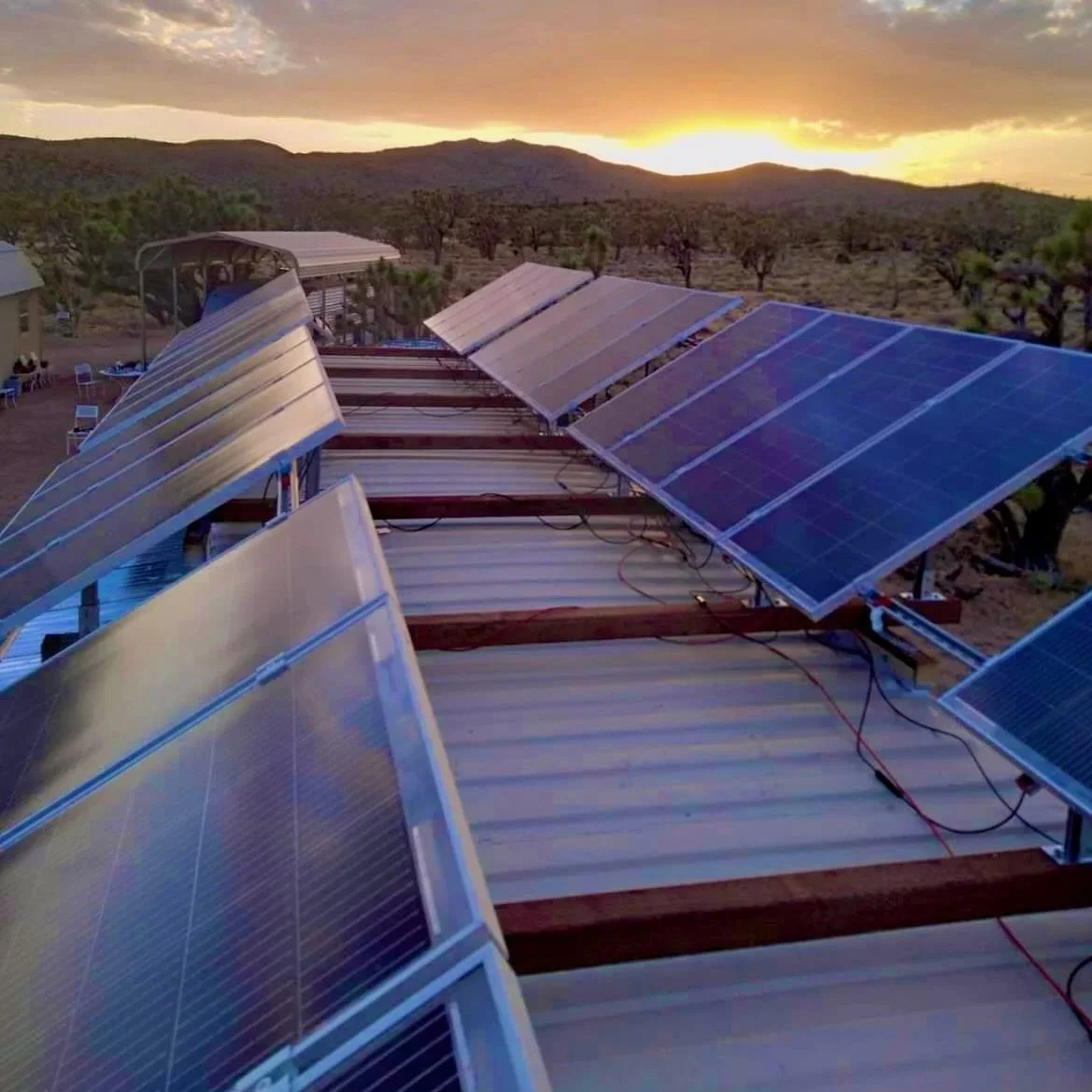
Now that we know how much energy you need to fill those batteries, we can figure out how many panels you need. In Arizona, we are blessed with incredible sun, but we calculate based on "Peak Sun Hours," not just daylight hours.
In winter, you might only get 4-5 peak sun hours. That's the number we use. If you design for summer sun, your system will die in December.
The Math:
Daily Usage (12.5 kWh) ÷ Peak Sun Hours (4.5) = 2.77 kW of Solar Input needed per hour of sun.
Round up. I always oversize the array by 20-30% to account for dust (and we have plenty of that), heat degradation, and less-than-perfect angles. So, for a 2.77 kW requirement, I'd recommend at least a 3.5 kW to 4 kW array.
Step 5: The Inverter – The Heart of the Beast
Your inverter determines how much stuff you can run at once. You might have huge batteries, but if your inverter is only 2000W, you can't run the microwave and the well pump at the same time.
Add up the wattage of everything you might turn on simultaneously (Well pump + A/C + Fridge + Lights). That's your peak load. Buy an inverter that handles that continuous load easily, with a surge rating for motor startups.
Future-Proofing Tip: We always use inverters that are stackable (parallel capable). You might only need 6kW today, but in five years when you build that workshop, you can add another 6kW inverter without scrapping your original equipment.
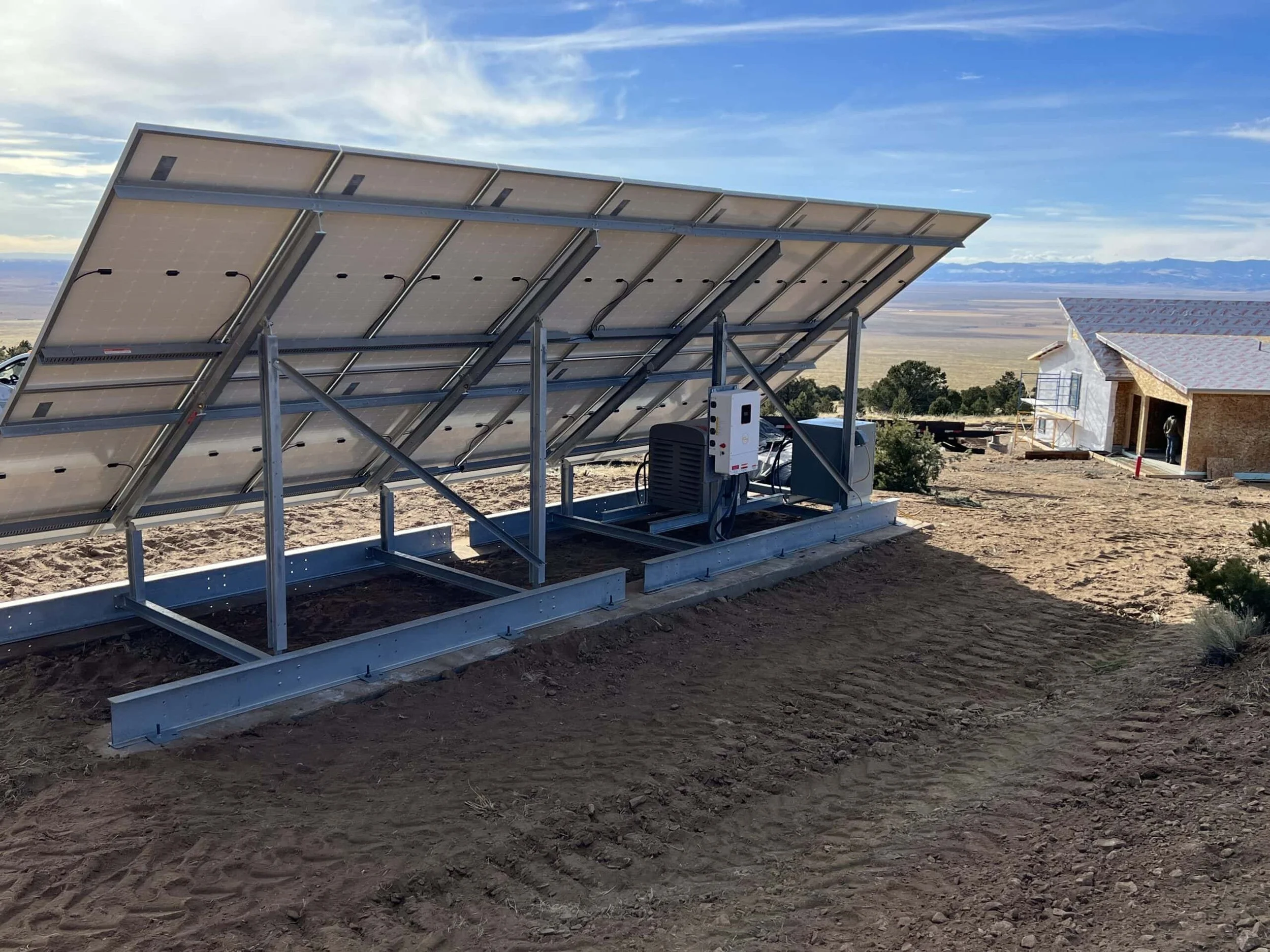
Expanded Turn-Key Solar Set Extra Panels Added
Why "Pre-Assembled" Beats "DIY from Scratch"
You can buy all these parts separately. You can spend weeks watching YouTube videos on how to crimp massive 4/0 cables without setting your garage on fire. Or you can let us do the hard part.
We build Custom Designed Turn-Key Pre-Assembled Solar Grids. We do the math, we size the wires, we program the charge controllers, and we mount it all on a frame that's ready to go. You get the fun part—setting up your homestead—without the headache of electrical engineering.
Steve's promise: If you buy a system from us, you get my personal cell number. If you're stuck on a Sunday, you call me. Try getting that service from an Amazon reseller.
Ready to Stop Guessing and Start Living Free?
Don't risk your independence on bad math. Let Arizona Off-Grid Solutions design and build a Turn-Key Solar Grid specifically for your property and lifestyle.
Contact Steve & Carly Today for Your Custom Quote
Click Here to Schedule Your Free Consultation
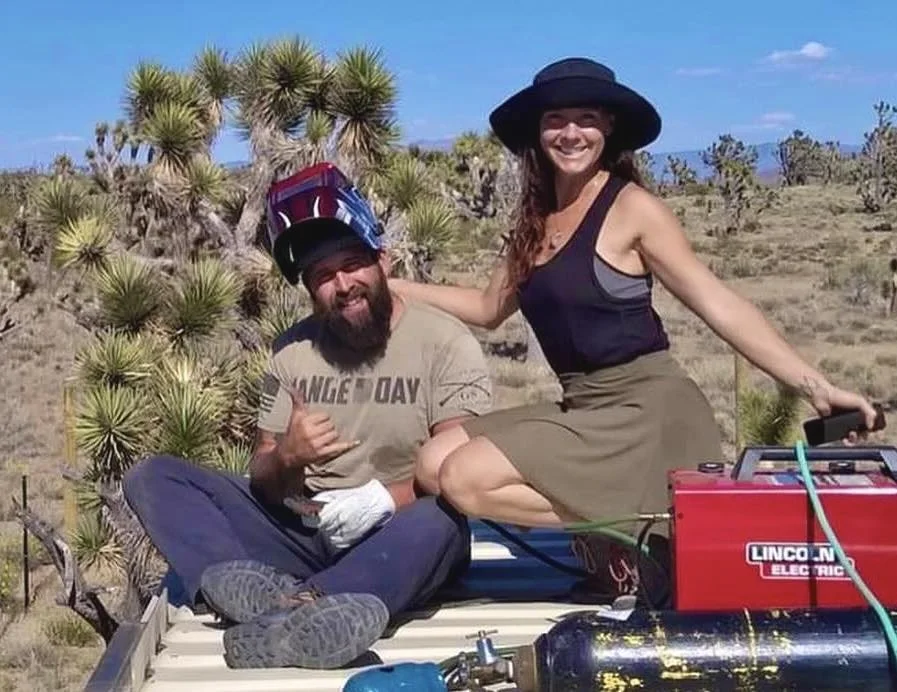
Welding Custom Solar Panel Racking
*Steve Ulman is a 25th Infantry combat veteran and owner of Arizona Off-Grid Solutions. Along with his fiancé Carly and their dogs Ghost and Phantom, Steve lives off-grid in Northwest Arizona, designing and installing custom solar systems across Arizona, Nevada, and Colorado.*